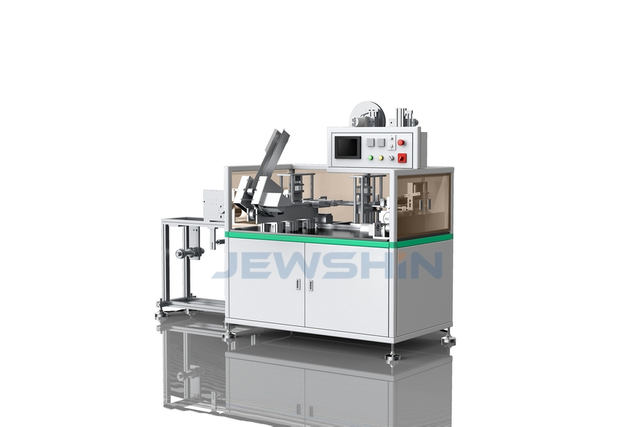
Automatic packaging machines stay near rated output when maintenance is based on operating hours, cycle counts, inspection records, and package-quality data rather than breakdowns alone. A line running 80 packs per minute completes 38,400 cycles in an 8-hour shift and more than 9.2 million cycles across 240 shifts. Daily cleaning protects sensors and sealing surfaces; weekly checks cover belts, chains, air systems, cutters, and fasteners; monthly work covers electrical cabinets, bearings, temperature control, and calibration. A 1% loss in availability equals 4.8 minutes of production in an 8-hour shift. Maintenance records should therefore connect downtime, rejects, component life, and recurring alarms.
A packaging machine can appear healthy while output is already falling. At 100 packs per minute, a planned 8-hour shift has a theoretical capacity of 48,000 packs. If small stops, slow restarts, and adjustments remove only 5% of available running time, theoretical production falls by 2,400 packs before rejects are counted. Maintenance teams should record stop duration and reason instead of grouping every event under “machine fault.”
That record becomes more useful when maintenance is divided by frequency. Shift checks can cover guards, abnormal sound, loose parts, product residue, film tracking, sensor lenses, seal appearance, air leaks, and conveyor movement. Weekly work can include belt tension, chain condition, cutters, vacuum cups, filters, tubing, and lubrication. Monthly work can include bearings, electrical cooling, terminals, heaters, temperature sensors, motors, and safety devices.
Frequency should follow usage as well as the calendar. Equipment running 16 hours per day accumulates twice the operating hours of the same model running one 8-hour shift.
Cycle count provides an even better reference for components that move once per package. A machine operating at 120 cycles per minute performs 57,600 cycles during an 8-hour shift and about 13.8 million cycles over 240 shifts. Bearings, cutters, springs, vacuum cups, sealing mechanisms, and pneumatic cylinders therefore need inspection intervals that reflect both calendar age and actual use.
Cleaning belongs near the start of that routine because contamination changes machine behavior without producing an obvious broken component. Dust on a photoelectric sensor can cause missed product detection; film fragments near a cutter can disturb separation; product deposits on sealing jaws can alter contact pressure. Operators should inspect the same locations every shift so changes become easier to notice.
Sensor cleaning should be followed by alignment checks. A sensor can be clean and still detect inconsistently if vibration has moved its bracket by a few millimeters. Product sensors, registration-mark readers, proximity switches, encoders, and end-position sensors should be checked against known machine positions after format changes or mechanical work. A 2024 maintenance program should treat repeated sensor alarms as maintenance information rather than events to reset indefinitely.
Mechanical inspection follows naturally because sensors often report symptoms created elsewhere. Belts can stretch, chains can elongate, couplings can wear, rollers can move out of alignment, and fasteners can loosen. Belt tension that is too low permits slipping; excessive tension increases force on bearings and shafts. Technicians should compare measurements with manufacturer tolerances rather than tightening components until movement “looks right.”
| Area | Routine check | Useful measurement |
|---|---|---|
| Conveyor | Tracking, wear, tension | Belt position and tension |
| Chain | Lubrication, elongation | Chain length across specified links |
| Bearing | Noise, play, temperature | Temperature trend |
| Roller | Alignment, surface wear | Position and runout |
| Cutter | Edge condition | Cuts or cycles since replacement |
| Motor | Heat and sound | Current and temperature |
Measured inspection also improves lubrication work. Adding grease whenever a bearing looks dry can be as harmful as missing lubrication, because excessive grease may increase temperature and damage seals. The lubricant grade, amount, and interval should follow the equipment manual. If a manufacturer specifies service every 2,000 operating hours, a line running 16 hours daily reaches that point in about 125 production days.
Lubrication records lead directly to compressed-air maintenance because pneumatic components also deteriorate gradually. Cylinders, valves, regulators, filters, fittings, tubing, and vacuum generators can keep operating while their efficiency falls. The U.S. Department of Energy has reported that leaks can account for roughly 20%–30% of compressed-air output in poorly maintained industrial systems, making leak inspection relevant to both machine response and plant energy use.
A pneumatic check should compare machine pressure during operation rather than only when equipment is idle. Pressure that falls during repeated cylinder movement can produce slower strokes and inconsistent timing. Soap solution or approved ultrasonic methods can locate leaks at fittings and hoses. Filters should be checked for contamination and moisture, while worn cylinder seals should be investigated when movement becomes slower at the same commanded pressure.
Air-related timing problems can then be separated from sealing problems. Heat-sealing performance depends on temperature, contact time, pressure, packaging material, and jaw condition. A displayed temperature of 160°C does not prove the sealing surface is uniformly at 160°C. Heater wear, sensor position, residue, damaged coatings, or uneven jaw contact can produce packages that look closed but fail later during handling.
Seal inspection should use the finished package as a process check. Repeated wrinkles, channels, contamination in the seal area, weak seams, or burned film deserve a mechanical and temperature inspection before operators keep changing settings.
Seal quality also affects reject calculations. At 60 packs per minute, an 8-hour shift can produce 28,800 packs. A 2% reject rate represents 576 packs; lowering it to 0.5% reduces rejects to 144, a difference of 432 packs per shift. Maintenance records should therefore include rejected-package categories, because seal failures, bad cuts, registration errors, missing products, and damaged cartons point toward different machine areas.
Cutting components deserve similar measurement. Instead of replacing a blade only after film begins tearing, record installation date, operating hours, approximate cycles, and defect history. If three consecutive blades begin producing incomplete cuts near 1.5 million cycles, inspection can be scheduled before that range. Replacement timing should be updated when packaging material thickness, speed, or product format changes.
The same approach works for cartoning machines, where carton opening, leaflet insertion, product loading, flap folding, and closing depend on repeatable timing. At 100 cartons per minute, one machine completes 6,000 cartons per hour. Vacuum cups, carton magazines, pushers, guides, chains, and closing components should be checked when crushed cartons, missed picks, poor flap position, or repeated loading stops begin increasing.
Electrical maintenance comes next because mechanical accuracy depends on stable controls. Cabinet filters and cooling fans should remain clean, cable connections should remain secure, and damaged insulation should be replaced according to manufacturer procedures. Variable-frequency equipment, servo systems, power supplies, temperature controllers, and PLC input/output hardware should be checked by qualified personnel under the site's electrical safety procedures.
Heat deserves attention inside electrical enclosures. A cooling fan that loses airflow may not stop the machine immediately, yet higher cabinet temperature can shorten electronic component life. Maintenance teams can record enclosure and component temperatures under comparable production conditions. A reading that rises from 35°C to 48°C over several inspections provides more information than a single statement that the cabinet “feels warm.”
Temperature records can be combined with vibration and current readings. A bearing that normally operates near 45°C but repeatedly reaches 60°C under the same speed and ambient conditions deserves inspection for lubrication, wear, alignment, or mounting problems. The same principle applies when motor current, vibration, vacuum level, air consumption, or cycle time moves away from the machine's established operating range.
| Recorded item | Baseline | Maintenance review point |
|---|---|---|
| Availability | 97% | Sustained fall below site target |
| Reject rate | 0.8% | Repeated increase by product |
| Bearing temperature | 45°C | Persistent rise under equal conditions |
| Air pressure | 6 bar | Drop during machine cycling |
| Changeover | 25 min | Repeated increase across comparable formats |
| Minor stops | 12/shift | Rising weekly frequency |
Baseline data also improves spare-parts planning. A €20 suction cup and a €40 sensor may be inexpensive compared with an hour of lost packaging time, while keeping every motor and controller in inventory may be unnecessary. Stock decisions should consider historical failure frequency, supplier lead time, replacement time, equipment redundancy, and whether one component can stop the entire line.
Parts replacement should be followed by calibration rather than immediate release to full production. Sensor positions, sealing temperature, conveyor speed, registration, product spacing, carton guides, and timing parameters can change during repair. After a 2025 component replacement, for example, recording before-and-after settings gives the next technician a usable reference instead of relying on memory.
Operators supply another layer of information because they see the machine across entire shifts. A short operator checklist can record new noise, vibration, film tracking, carton feeding, seal appearance, air leakage, repeated alarms, and reject counts. If three shifts report the same intermittent symptom, the maintenance team has a stronger reason to inspect it even when the machine runs normally during a brief service visit.
Maintenance history should finally connect every observation to equipment condition. Record the fault, time, operating hours or cycles, affected part, finding, repair, replaced component, downtime, and post-repair result. Over 12 months, repeated entries can show whether one bearing, sensor, belt, valve, heater, or cutter requires attention unusually often. A maintenance program becomes more accurate when intervals are revised from measured machine history instead of being copied unchanged from a calendar.